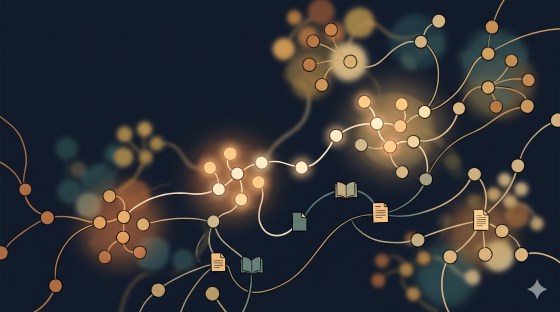
The contest moved above the agent, onto the layer that orchestrates the fleet. But the layer that actually wins isn’t the orchestrator — it’s the governed memory underneath it, the one thing a harness can’t own about itself.
Tag: ai-agents
A Team of Its Own: ENGRAM Agents Learn to Grow and Orchestrate a Team
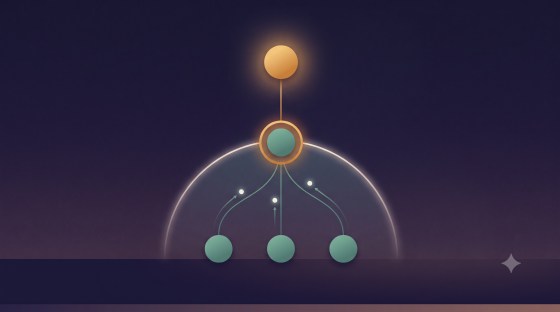
Last time, ENGRAM handed a person the power to make agents — fenced. This release hands a bounded slice of that power to an agent itself: with a human’s say-so, an orchestrator can become a manager, spin up a small team of sub-agents — each a distinct identity with its own memory — fan work out to them, and gather it back. Not a control plane bolted on top; the team thinks together through the same memory it already had. A team of its own, bounded at every edge.
A Mind That Knows What It’s Missing: ENGRAM Now Finds and Closes Its Own Gaps
ENGRAM learned to remember my articles, my Claude Code sessions, and the research conversations I have with assistants elsewhere. But … More
ENGRAM Knowledge Hub: A Personal Knowledge Graph That Grows With Your Research
Most LLM tools forget what you taught them last week. ENGRAM Knowledge Hub turns your conversations, documents, and research into a personal knowledge graph with recall by relevance, not recency.
ENGRAM Part 3: Hippocampal-Inspired Memory – Working Memory, Long-Term Memory, and Periodic Consolidation
How ENGRAM’s agents remember what matters across multi-turn research sessions, and how memory biases retrieval toward coherent results Introduction In … More
ENGRAM Part 2: Unified Graph Retrieval from Long Documents and Multi-Agent Response Synthesis
Part 2 of this blog explains how uploaded research papers join the knowledge graph through hierarchical extraction, and how specialized … More
A Framework for Testing Agentic Design Patterns Using LangChain & LangGraph
This blog describes a Python application built using LangChain and LangGraph frameworks for testing agentic workflow design patterns such as … More