
A session transcript is authoritative about what was attempted. Git is authoritative about what shipped. For three months ENGRAM had only the first one, and I did not notice I was asking it the wrong questions.

AI, BPM, Content, LLM, Portals, Sites and more…
A session transcript is authoritative about what was attempted. Git is authoritative about what shipped. For three months ENGRAM had only the first one, and I did not notice I was asking it the wrong questions.

The hard part of running a fleet was never spawning the agents or routing the tasks — your harness already does that. The hard part is what they know, and whether one agent’s finding can reach another without leaking to everyone. That is not a scheduling problem. It is a memory problem.

ENGRAM could already remember an enormous amount — articles, code sessions, conversations from half a dozen assistants. What it could … More

ENGRAM already remembered my articles and my code sessions. The last missing piece was the work I do with assistants … More
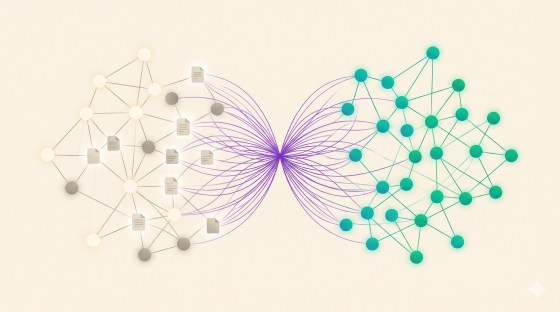
This is a follow-up post about the next layer of knowledge consolidation in ENGRAM Knowledge Hub. Ingestion of Claude Code sessions into the Knowledge Hub allowed me to close the gap between what I researched and planned and what I actually built, including the changes, feature design enhancements, and pivots that often happen during development.

How ENGRAM’s agents remember what matters across multi-turn research sessions, and how memory biases retrieval toward coherent results Introduction In … More

Part 2 of this blog explains how uploaded research papers join the knowledge graph through hierarchical extraction, and how specialized … More

Part 1 of this blog series explains how query-entity relevance spreading across a knowledge graph eliminates the need of typical … More

This blog describes a cybersecurity threat intelligence platform built in Python that models relationships between threat actors, attack techniques, vulnerabilities, … More

This blog is about a project I built to confirm an idea: LLM reasoning can generate declarative query specifications in … More

