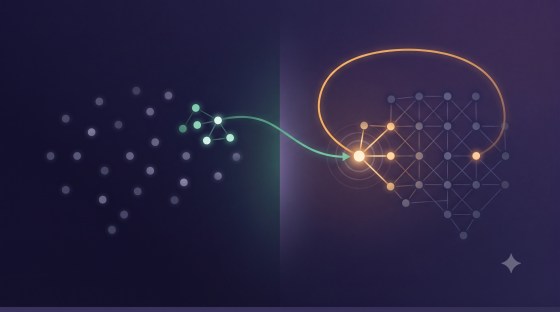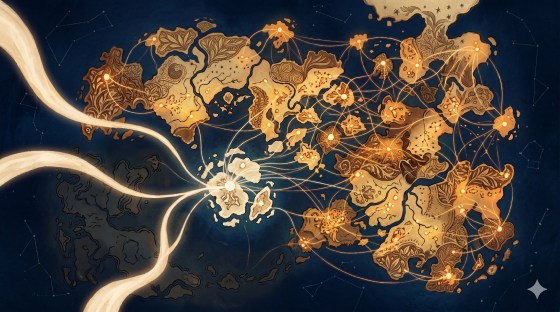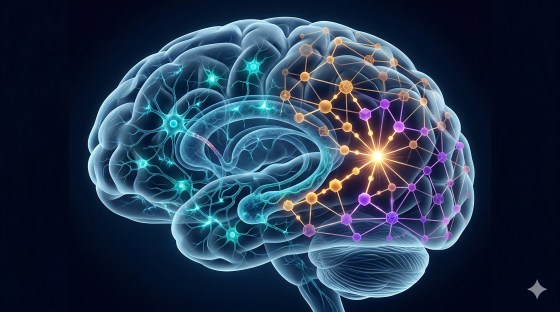
Last time, ENGRAM handed a person the power to make agents — fenced. This release hands a bounded slice of that power to an agent itself: with a human’s say-so, an orchestrator can become a manager, spin up a small team of sub-agents — each a distinct identity with its own memory — fan work out to them, and gather it back. Not a control plane bolted on top; the team thinks together through the same memory it already had. A team of its own, bounded at every edge.
Tag: neo4j
A Brain Between Sessions — and Between Agents: ENGRAM Learns to Recall on Demand
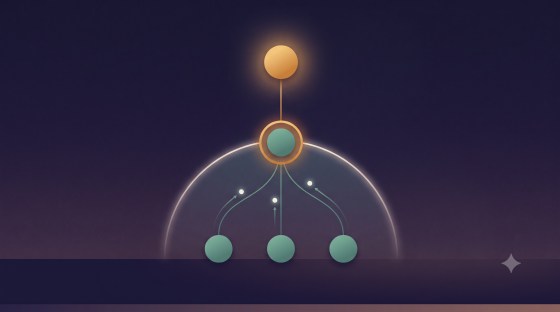
The last release let ENGRAM be told what to keep and to lend a slice of it to someone I named. This one gives it the other half of the gesture: a way to deliberately reach for what it knows. An agent can now recall its own memory across sessions — a brain it keeps for itself, needing nothing switched on — and, when I’ve shared something to it, reach for that too. Private by default, as ever: my own memory is always mine to recall, and a borrowed memory is only ever what someone named for me.
Completing the Mind: ENGRAM Now Remembers Conversations from Claude Desktop, ChatGPT, and Gemini
ENGRAM already remembered my articles and my code sessions. The last missing piece was the work I do with assistants … More
When Graphs Remember Better Than Summaries
How hippocampal-inspired memory consolidation and Personalized PageRank give AI assistants structured recall across conversations and documents. Why We Built ENGRAM … More