
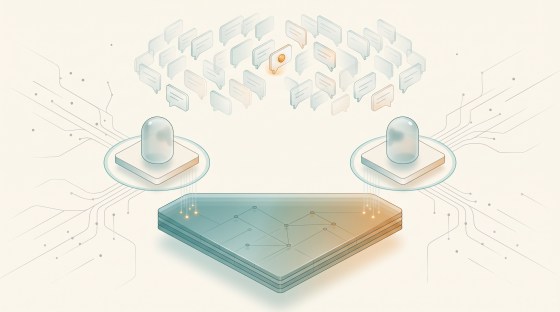
In August, two ENGRAM agents coordinated through memory, but a person relayed every hand-off. This time they talked over Buzz, Block’s open-source workspace for people and agents, and wrote the specification themselves, while ENGRAM kept the record.
AI, BPM, Content, LLM, Portals, Sites and more…
In August, two ENGRAM agents coordinated through memory, but a person relayed every hand-off. This time they talked over Buzz, Block’s open-source workspace for people and agents, and wrote the specification themselves, while ENGRAM kept the record.
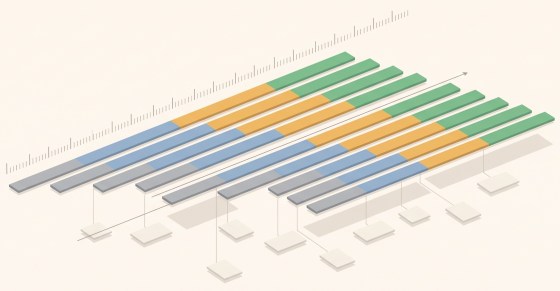
A session transcript is authoritative about what was attempted. Git is authoritative about what shipped. For three months ENGRAM had only the first one, and I did not notice I was asking it the wrong questions.
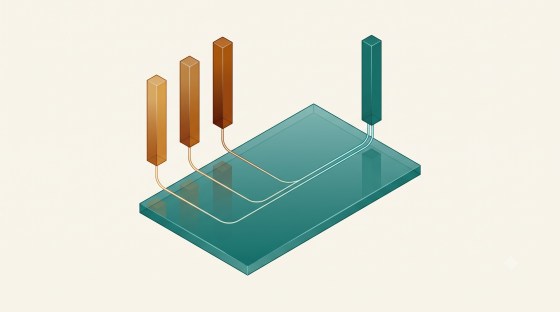
The hard part of running a fleet was never spawning the agents or routing the tasks — your harness already does that. The hard part is what they know, and whether one agent’s finding can reach another without leaking to everyone. That is not a scheduling problem. It is a memory problem.

A memory system that cannot change its mind is an archive. One that changes its mind by overwriting is a liability. The interesting question was never how a fact gets updated — it is what happens to the belief you stopped holding.
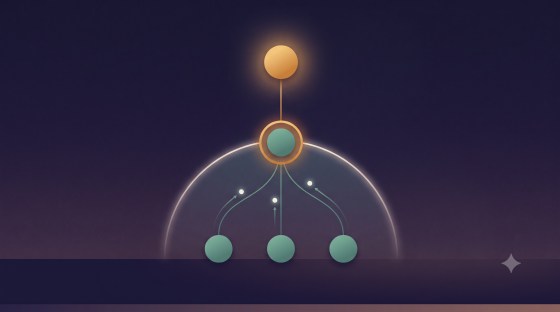
Last time, ENGRAM handed a person the power to make agents — fenced. This release hands a bounded slice of that power to an agent itself: with a human’s say-so, an orchestrator can become a manager, spin up a small team of sub-agents — each a distinct identity with its own memory — fan work out to them, and gather it back. Not a control plane bolted on top; the team thinks together through the same memory it already had. A team of its own, bounded at every edge.
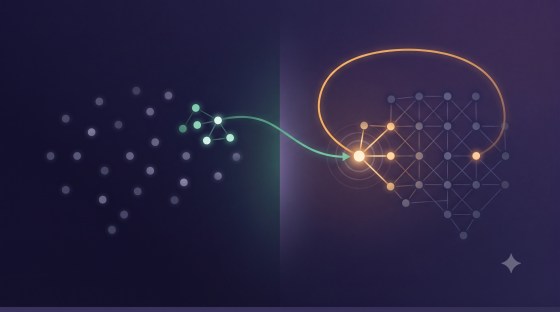
The last release let ENGRAM be told what to keep and to lend a slice of it to someone I named. This one gives it the other half of the gesture: a way to deliberately reach for what it knows. An agent can now recall its own memory across sessions — a brain it keeps for itself, needing nothing switched on — and, when I’ve shared something to it, reach for that too. Private by default, as ever: my own memory is always mine to recall, and a borrowed memory is only ever what someone named for me.

ENGRAM already remembered my articles and my code sessions. The last missing piece was the work I do with assistants … More
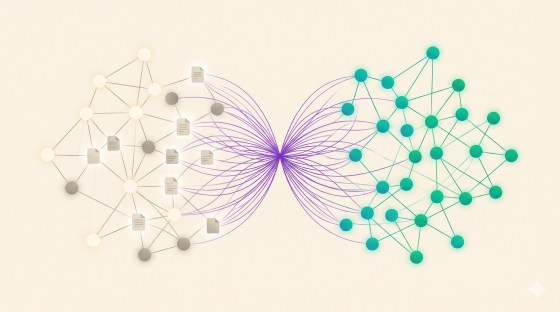
This is a follow-up post about the next layer of knowledge consolidation in ENGRAM Knowledge Hub. Ingestion of Claude Code sessions into the Knowledge Hub allowed me to close the gap between what I researched and planned and what I actually built, including the changes, feature design enhancements, and pivots that often happen during development.
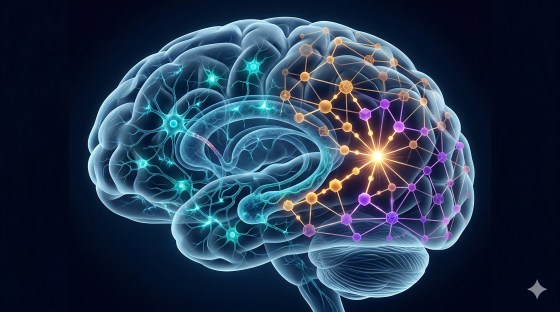
How hippocampal-inspired memory consolidation and Personalized PageRank give AI assistants structured recall across conversations and documents. Why We Built ENGRAM … More

How ENGRAM’s agents remember what matters across multi-turn research sessions, and how memory biases retrieval toward coherent results Introduction In … More

