
In August, two ENGRAM agents coordinated through memory, but a person relayed every hand-off. This time they talked over Buzz, Block’s open-source workspace for people and agents, and wrote the specification themselves, while ENGRAM kept the record.

AI, BPM, Content, LLM, Portals, Sites and more…
In August, two ENGRAM agents coordinated through memory, but a person relayed every hand-off. This time they talked over Buzz, Block’s open-source workspace for people and agents, and wrote the specification themselves, while ENGRAM kept the record.

The safest agent I had was the one that couldn’t help anybody. Authority used to attach to the agent, because there was nothing smaller to attach it to – restrict a worker, and you restricted it everywhere. A project is smaller. In v1.17 a project can have members, so a token can be trusted inside one piece of work without being trusted across the whole instance.

Associative retrieval does not fail when a question has a correct answer. It returns the plausible neighbour, states it confidently, and gives you no signal that it did. So ENGRAM now lets a project declare which documents are authoritative – and every agent working in that project inherits that declaration without being told it exists.

A session transcript is authoritative about what was attempted. Git is authoritative about what shipped. For three months ENGRAM had only the first one, and I did not notice I was asking it the wrong questions.

The hard part of running a fleet was never spawning the agents or routing the tasks — your harness already does that. The hard part is what they know, and whether one agent’s finding can reach another without leaking to everyone. That is not a scheduling problem. It is a memory problem.
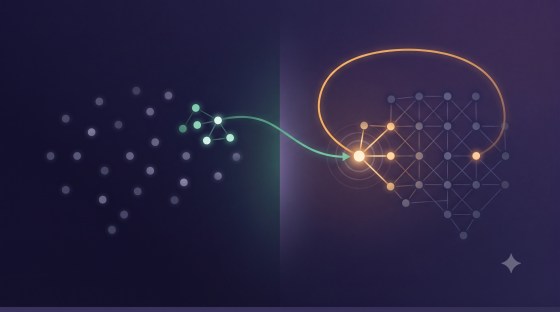
The last release let ENGRAM be told what to keep and to lend a slice of it to someone I named. This one gives it the other half of the gesture: a way to deliberately reach for what it knows. An agent can now recall its own memory across sessions — a brain it keeps for itself, needing nothing switched on — and, when I’ve shared something to it, reach for that too. Private by default, as ever: my own memory is always mine to recall, and a borrowed memory is only ever what someone named for me.

ENGRAM learned to remember my articles, my Claude Code sessions, and the research conversations I have with assistants elsewhere. But … More

ENGRAM already remembered my articles and my code sessions. The last missing piece was the work I do with assistants … More
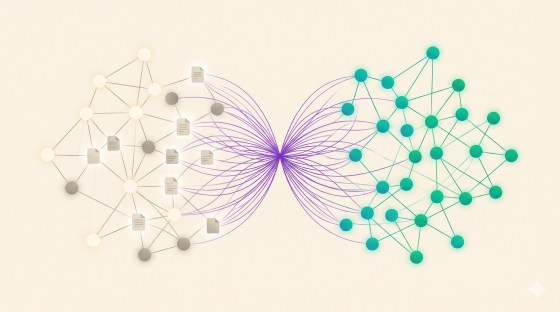
This is a follow-up post about the next layer of knowledge consolidation in ENGRAM Knowledge Hub. Ingestion of Claude Code sessions into the Knowledge Hub allowed me to close the gap between what I researched and planned and what I actually built, including the changes, feature design enhancements, and pivots that often happen during development.

Most LLM tools forget what you taught them last week. ENGRAM Knowledge Hub turns your conversations, documents, and research into a personal knowledge graph with recall by relevance, not recency.

